
The toddler years are an important stage of early childhood development. During this period, children become increasingly curious about their surroundings and begin developing greater control over their bodies. Everyday activities such as walking, climbing, stacking, pushing, pulling, touching, and carrying objects give toddlers opportunities to practice new skills. Toys from brands such as BanaSuper can give children additional opportunities to explore these movements through safe, age-appropriate play.
Play is one of the most natural ways for toddlers to learn. Instead of separating learning from everyday activities, parents can provide toys and play environments that encourage children to explore movement, textures, sounds, shapes, and different types of physical activity. The right toddler toys can support motor development while also giving children opportunities to engage with their senses. From simple building blocks and stacking toys to sensory activities and soft indoor climbing equipment, different toys can support different areas of development.
Understanding Motor Development in Toddlers
Motor development refers to the gradual development of movement, coordination, balance, and physical control. It includes both gross motor skills and fine motor skills, which develop through repeated practice and everyday play.
Gross Motor Skills
Gross motor skills involve larger movements that use major muscle groups. Walking, running, jumping, climbing, crawling, kicking, throwing, and balancing are common examples.
Toddlers need opportunities to practice these movements because physical coordination develops gradually. Active toys can encourage children to move around while exploring their environment.
For example, soft climbing equipment can provide opportunities for a toddler to crawl over, climb onto, step across, and move around different surfaces. Push-and-pull toys can encourage walking and coordination as children move their bodies while controlling the movement of the toy.
Ball play is another simple way to encourage gross motor activity. Toddlers can roll, kick, carry, throw, or chase a ball depending on their age and abilities. These activities encourage movement while making physical practice feel like play.
Fine Motor Skills
Fine motor skills involve smaller movements, particularly those involving the hands and fingers. These skills become increasingly important as toddlers learn to manipulate objects and perform everyday tasks.
Building blocks, stacking toys, shape sorters, puzzles designed for toddlers, and large age-appropriate art materials can all encourage fine motor practice.
When a toddler picks up a block, positions it, and places it on top of another block, they are practicing hand control and hand-eye coordination. Repeating the activity allows them to gradually become more comfortable with precise movements.
Fine motor play can also introduce simple problem-solving. A toddler may discover that a particular shape fits into one opening but not another, encouraging them to experiment rather than simply follow instructions.
What Is Sensory Development?
Sensory development involves how children experience and respond to information through their senses. Toddlers learn by looking, listening, touching, moving, and interacting with objects in their environment.
A soft toy provides a different tactile experience from a smooth plastic block. A musical toy introduces sound, while a ball provides visual and movement experiences as it rolls across the floor. Climbing, crawling, and balancing activities also give toddlers opportunities to become more aware of their bodies and movements.
Sensory play does not have to involve complicated equipment. Simple toys and everyday play activities can provide many opportunities for children to explore different textures, sounds, shapes, and movements.
This hands-on exploration is especially valuable because toddlers are active participants. They can touch an object, move it, observe what happens, and repeat the activity as they become more familiar with it.
How Toddler Toys Support Motor Development
Different types of toddler toys can encourage different physical skills. Toys that require children to manipulate objects or move their bodies can make skill development a natural part of everyday play.
Building Blocks
Building blocks are simple, versatile toys that can support several areas of development.
Picking up and moving blocks encourages grasping and hand control. Stacking blocks requires toddlers to coordinate their hands and eyes while carefully positioning each piece. When a tower falls, children can rebuild it and experiment with different arrangements.
Blocks can also become part of imaginative play. A toddler might build a tower, bridge, road, or another structure. Because blocks can be used in many different ways, they can remain useful as a child’s play skills become more advanced.
Stacking and Sorting Toys
Stacking and sorting toys encourage toddlers to handle objects while exploring basic concepts such as size, shape, order, and balance.
A toddler may place larger pieces underneath smaller ones or sort objects according to their shape. These simple activities combine physical manipulation with observation and problem-solving.
The important part is not whether the child completes the activity perfectly. The process of trying, adjusting, and trying again gives the toddler opportunities to practice coordination and independent thinking.
Push-and-Pull Toys
Push-and-pull toys encourage toddlers to move around while interacting with an object. Pushing a toy requires children to coordinate their hands and body as they move forward. Pulling a toy behind them requires them to adjust their movement as they walk.
These toys can be useful for active indoor play, provided there is enough safe space for movement. Parents can allow toddlers to explore at their own pace while supervising the activity.
Balls and Active Play Toys
Balls can be used in many different ways. Toddlers can roll a ball toward a parent, kick it across a room, carry it from one place to another, or chase it.
These simple activities encourage movement, visual tracking, and coordination. They can also become social activities when parents take turns rolling or passing a ball with their child.
How Toddler Toys Support Sensory Development
Motor development and sensory development often happen together. When toddlers climb, build, touch, sort, or move objects, they are receiving information about both their bodies and their surroundings.
Textured Toys
Toys with different surfaces can encourage tactile exploration. Smooth, soft, ridged, bumpy, and flexible materials can each provide a different experience.
Toddlers naturally explore many objects with their hands, so offering age-appropriate toys with varied textures can give them opportunities to notice and compare different physical properties.
Parents should always consider the child’s age when selecting sensory toys and avoid products containing small parts that could create a choking risk.
Musical and Sound-Based Toys
Musical toys can encourage toddlers to explore sound and cause and effect. A child may shake, tap, press, or move a toy and discover that their action produces a sound.
This type of interaction combines sensory exploration with physical movement. It can also encourage toddlers to clap, dance, or move along with sounds.
Shape and Texture Exploration
Shape sorters and other hands-on toys allow toddlers to look at, hold, and manipulate different objects. A child can examine the shape of a piece, feel its surface, and attempt to place it into the corresponding opening.
These activities provide opportunities for sensory exploration while also encouraging fine motor control and problem-solving.
Active Indoor Play for Toddlers
Toddlers do not always need traditional tabletop toys to develop physical skills. Safe indoor play equipment can provide additional opportunities for movement and exploration.
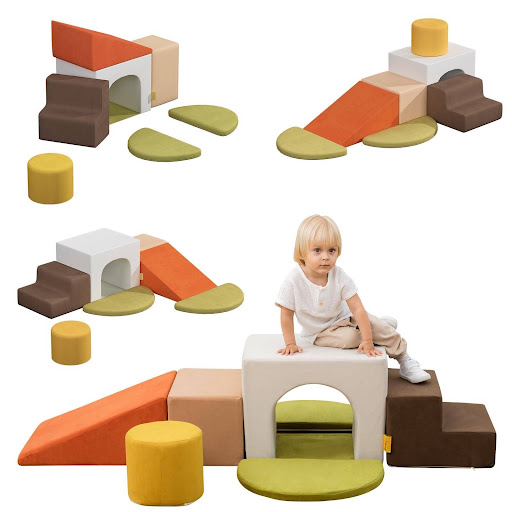
Soft climbing structures, ramps, tunnels, play mats, and modular foam pieces can encourage toddlers to crawl, climb, step, balance, and move between different positions.
BanaSuper, for example, offers children’s indoor play equipment designed around active and imaginative play. Its range includes climbing equipment, arches, tunnels, play sets, play mats, and other products intended to create opportunities for physical activity indoors.
A modular soft play set can be particularly flexible because the pieces can be arranged in different ways. One arrangement might encourage climbing, while another can create a simple pathway or space for imaginative play.
The key benefit of this type of play is the opportunity to move. Toddlers can explore different positions and movements while interacting with their surroundings.
Understanding Toddler Behaviors During Development
Motor and sensory development take place alongside emotional and communication development. Toddlers are still learning how to communicate their needs and manage strong emotions, and they may sometimes express frustration through physical behavior.
Parents may have questions such as why does my toddler hit himself when they notice self-directed hitting or similar behavior. There can be different reasons for behaviors like this, and the situation, frequency, and circumstances surrounding the behavior are important to consider.
Rather than focusing only on the behavior itself, parents can observe what happens before and after it. A toddler may be tired, frustrated, overwhelmed, or struggling to communicate what they want. If a behavior is repeated, causes injury, or creates ongoing concern, parents should discuss it with an appropriate pediatric or child-development professional.
A supportive play environment can give toddlers appropriate ways to move, explore, and interact while adults help them develop communication and emotional skills.
Choosing the Right Toddler Toys
When choosing toys for toddlers, parents can consider several practical factors.
Match Toys to Age and Abilities
Always consider the child’s current abilities and follow the manufacturer’s recommended age range. A suitable toy should provide an opportunity for exploration without creating unnecessary risks.
Prioritize Safety
Toys should be checked regularly for broken pieces, loose components, or other damage. For younger toddlers, parents should avoid toys containing small parts that could be swallowed.
Encourage Active Participation
Toys are most useful for development when children can actively interact with them. Building, stacking, sorting, touching, moving, climbing, and manipulating objects all provide opportunities to practice developing skills.
Choose Open-Ended Toys
Toys that can be used in multiple ways can remain interesting as toddlers grow. Blocks, modular play equipment, and simple sensory toys can support different types of play over time.
Allow Room for Exploration
Parents do not need to direct every activity. Giving toddlers time to experiment independently can encourage curiosity and confidence. Adults can participate when needed by demonstrating an activity, asking simple questions, or helping a child try again.
Conclusion
Toddler toys can support important areas of early childhood development when they give children opportunities to move, touch, listen, observe, build, sort, and experiment. Building blocks, stacking toys, balls, sensory toys, and soft indoor play equipment can each contribute to different aspects of motor and sensory development.
The most valuable play experiences do not necessarily require complicated or expensive toys. Simple activities can provide meaningful opportunities for toddlers to practice coordination, explore their senses, solve small problems, and become more confident in their physical abilities.
By providing age-appropriate toys, a safe environment, and opportunities for active exploration, parents can make everyday play a natural part of a toddler’s motor and sensory development.
