
In the current technology-thriving world, the ability to effectively manage several devices is part and parcel of professional and personal productivity. Laptops, tablets, smartphones, external monitors, storage drives, and other peripherals are all contending to access ports and connectivity and can cause clutter and inefficiency. This is when a docking station is useful. As a once-upon-a-time luxury device, docking stations have evolved to become essential tools that make connectivity, increased performance, and work easier no matter where they work in the home or office environment.
A docking station is a hub that connects to your single device, not just a multi-port. It is a bridge that turns into a fully-fledged workstation. Docking stations can be connected using one cable thus allowing easy connectivity to monitors, keyboards, external storage, audio devices and access to the network. This centred location is not only more convenient but can also decrease chaos that is often caused by having multiple adapters and various maladroitly conjoined cables. Employees, telecommuters, as well as students are all finding out just how a docking station can make their life a lot easier.
Development of the docking systems has also surfaced with the quick technological changes like USB-C USB and Thunderbolt. Contemporary docking stations support high speed data transfer, rapid charging and multi display connections and as such are very versatile. Whether at work, pursuing a creative project or seeking amusement, a docking station is quietly emerging in the role of unsung hero of modern day workplace and digital lifestyle management.
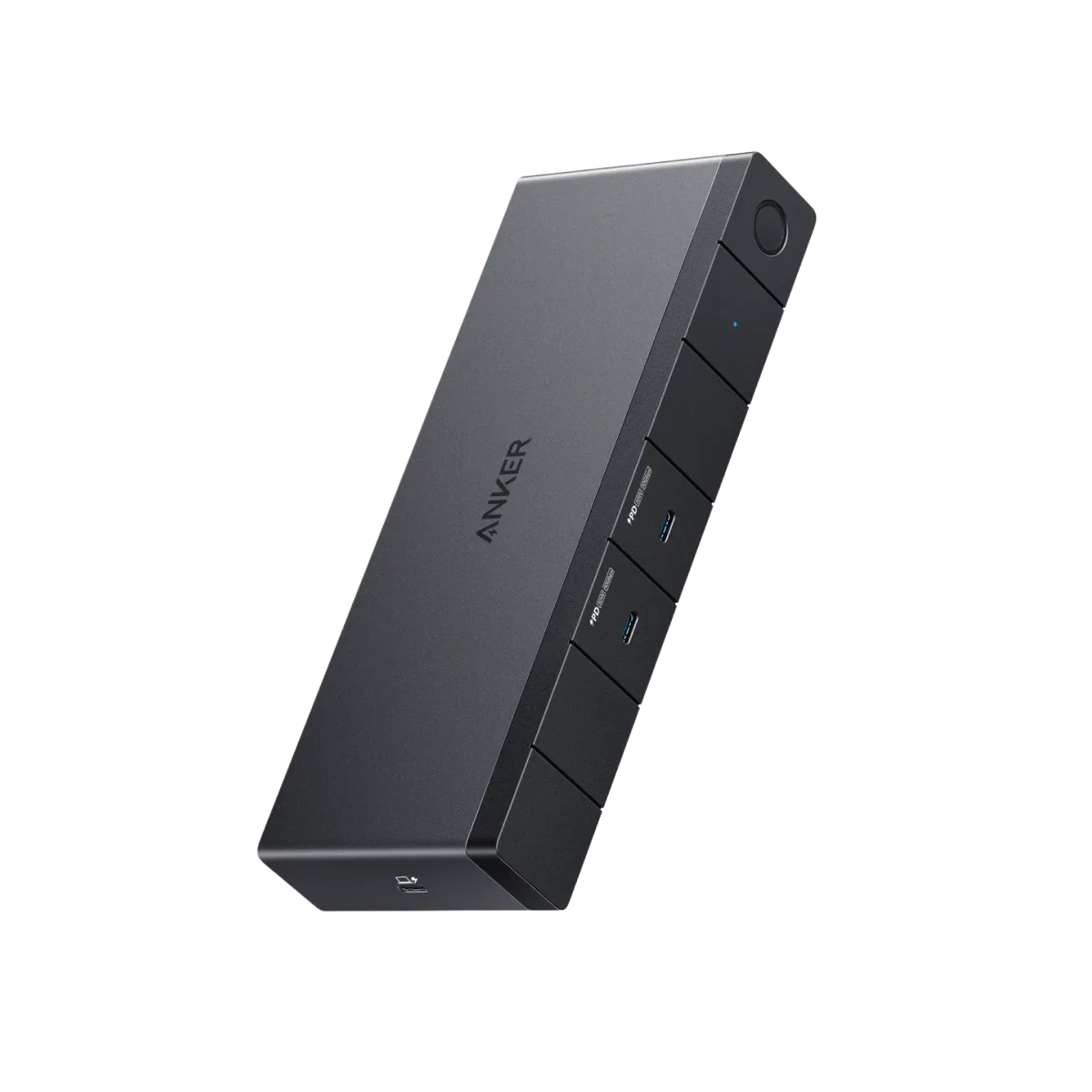
The Evolution of Docking Stations
Initial years of port replicators are long gone and docking stations now have a way to go. There used to be simple ones that performed the additional USB or audio jack some years back and were made in desktop replacement laptops. They gradually transformed over time into advanced hubs that could be used to regulate delivery of power, delivery of high-speed data and video output using one connection.
With the emergence of USB-C and Thunderbolt technology this shift has been spurred on. In contrast to the prior docking systems, the modern docking is able to charge laptops, support a variety of 4K monitors, exchange data at very high speeds, and even be connected to the external graphics overlay or data array. The evolution shows that docking stations are not accessories anymore, they are important components that enhance the performance of all the computing devices of these days and organize the workspace and make it more productive.
Enhancing Productivity Through Docking Stations
The important advantage of docking stations is that these stations can integrate workflow or enhance production. With a single hub that links all the peripherals, a user is evaded the tedious activities of plugging and unplugging. The availability of these devices puts the professionals in a position to dock their laptops and have a dual display, external keyboards, printers, audio equipment and a host of other devices needed without waiting time to set up anything.
The functionality is especially useful to remote workers, hot-desking employees or co-working spaces that experience mobility (between workstations). It also provides continuity where devices remain networked, powered and peripheral connected, via a docking station. Docking stations are an asset in any office space with a minimum downtime and a maximum connectivity they allow efficiency and productivity.
Docking Stations and Device Compatibility
Current docking stations are made to be versatile with many stations being able to support a wide range of operating systems and devices. USB C / Thunderbolt docks are compatible with Windows laptops, MacBooks, and even some tablets that will allow people to reduce the number of connections they have to different devices.
Such a universal position eliminates the necessity of gadget-specific adapters or cords and makes IT management at the individual and corporate level a whole lot easier. It further prolongs the life of equipment through the offering of a common trustable interface to meet all the connectivity requirements. It can be used to connect a printer, an external monitor, a headset, storage devices or any other device. Docking stations are an elegant solution that ties together diverse pieces of technology into a cohesive working world.
Docking Stations for Creative Professionals
Outside of the office, docking stations have also become widespread amongst content creators, designers and multimedia professionals. The large files of video editing, graphical rendering, audio production can be edited with no lag as large file transfer is conducted at high speed. The multiple display support offers extra desk space to edit software, spreadsheets or design tools and improves work flow.
Moreover, audio and video connections can be directly connected to docking stations, greatly reducing the amount of messy cables, and when needed they can be easily set up to livestream, produce music, or conduct a video conference. This proves that docking stations do not merely play the key role in productivity but can be particularly useful in creative work where speed, connectivity and flexibility are the key factors.
Docking Stations in Modern Gaming
Docking stations are also useful in gaming set ups. The game players normally employ the use of more than two monitors, hard drives and fast Internet connectivity to ensure maximum performance. Docking stations make these arrangements easy, i.e., central connectivity and immediate access to all appendages.
Latency and response time is paramount to professional and competitive players. Thunderbolt 4 support on high-end docking stations will facilitate multiple simultaneous inputs, which will then allow players to play games without a hitch. The ease and speed provided by the docking stations has led to their relevance in the gaming systems.
The Future of Docking Stations
With the ever-advancing technology where laptops are becoming thinner, docking stations will be even more important in enhancing the utilization of equipment. In the future, docking stations can also combine wireless power delivery, peripheral management with the help of artificial intelligence, and even an increased level of security.
Moreover, USB-C and Thunderbolt interfaces become standard, so the docking stations will not become obsolete in the coming years. Offering fast and reliable service by providing centralized, high-speed connectivity, these devices will keep making workflows simple, and promote productivity as well as sustaining inventive and professional endeavors in all industries.
Conclusion
Docking stations go well beyond being a data port hub, they are the spine of the contemporary workplace. Docking stations have proven to be the indispensable devices of professionals, creators, and gamers as they combine connectivity, remove cable clutter, provide quick data transfer speed and supply power. They also allow the use of a single machine as a full fledged workstation, giving the ease, productivity, and portability which before were nonexistent through conventional laptop inputs.
In an era of a busy digital lifestyle, where efficiency, innovation and fluidity is very important, the docking station is a mute star. The idea to spend money on a quality docking station is not only to make work easier but also to future-proof your work environment in warehouses and production facilities, not to mention making the control of all attached devices easy and manageable and help the technology ecosystem attain its full potential. With the increasing popularity of the remote work, creative industry, and game framework, the role of the docking station will only be on an increase to maintain its reputation as an essential device to the modern user.
